
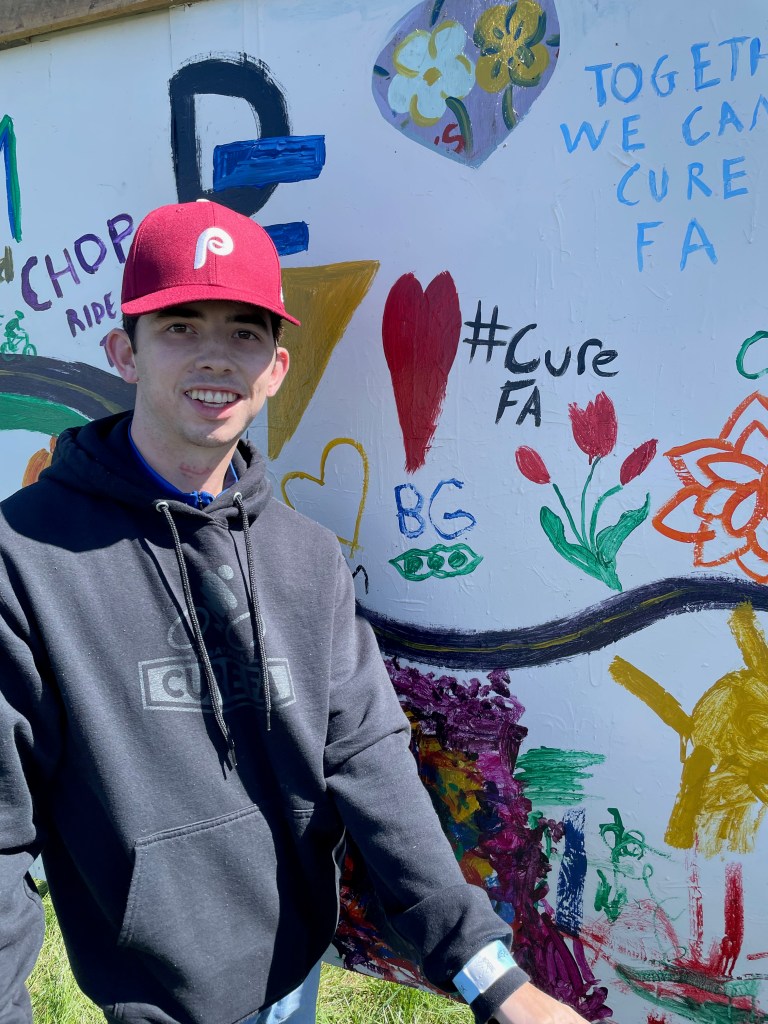
Figure 1: Me after I drew my dad’s initials, BG, on the mural at RideATAXIA in Philadelphia.
Over two years after I started experiencing symptoms that I couldn’t explain, I heard the words Freidreichs ataxia for the first time. I heard them, but they were empty words. In one ear and out the other they went, just as if he told me an inside joke that I was on the outside of.
“I have no idea what that means, but I’m sure we can fix it. I just need to start using better posture, like he said. At least he knows what’s wrong,” I thought.
Oh, was I optimistic. But thank goodness my mom wrote it down and looked it up later that day. Otherwise, I would’ve been really confused when my genetic tests confirmed that I had it.
I’ll always remember the night my parents told me what the doctor was talking about. That weird word? What did he call it? My parents knew all about it, and their faces showed it. I’ll never forget the look of hurt, shock and maybe even embarrassment I saw when they called me into their room.
“Am I in trouble?” I said.
“No, buddy. Sit down,” my dad replied, leaning forward on the edge of the bed.
Then, as calmly as he could, he told me what my disease was and why it explained the weird symptoms I’d been experiencing: voice trouble, difficulty running and jumping, clumsy footwork, extreme fatigue. It was a genetic, neuromuscular disease and it caused balance trouble and slowed coordination, and it’s why I had scoliosis.
“You know how your hands tremble when you try to unlock the door?” dad said.
It all made sense. “So I’ll just keep doing physical therapy,” I thought. But before I could finish that thought, he delivered the piercing words.
“Right now, your disease is incurable,” he said, concentrating on the carpet below.
So no more baseball? I can’t learn to run again? Those were the thoughts that immediately rushed into my head.
As if that wasn’t already hard to swallow, I got another pill that was too big to get down: my disease was going to get WORSE, too, not better. But I didn’t break down, not right away, and neither did my parents, although I couldn’t stand to look my mom in the eyes. She sat to the side quietly.
I silently listened to my dad explain. I don’t remember the second half of what he said, but I remember the previous things that I’ve written vividly and meticulously. I don’t even remember breathing. I just remember sitting there like a statue, feeling like I’d just been gut-punched by Evander Holyfield. Like a punching bag, there was no hitting back I could do, even if I could; just figure out how to absorb the mightiest blow I’d ever taken.
That feeling remained the same for a few hours, I think. I remember shortly after that talk, me and my parents sat on the couch, and the only thing I remember being said was my dad saying, “I’d take it all from you and put it on myself if I could.” What a bold statement, but I wholeheartedly believe him. I’m pretty sure hugs were exchanged and words of encouragement maybe, but there was nothing else to say right then.
My parents went to bed, but I remained on the couch in the living room. I couldn’t get up to go to my room if I wanted to. But I don’t know that any place could’ve made me feel better right then. All I remember was a flurry of thoughts running through my head, something like:
“I’ll lose everything. Sports. Walking. I’ll be in a wheelchair in a few years probably. My future is ruined.”
Obviously, there was more. A lot more. But those are the things I remember driving me to tears. I cried more than I ever have. I genuinely don’t remember falling asleep, I just remember crying until my eyes went dry.
I also remember after we talked on the couch, my dad went to my sister’s room, I guess to fill her in on what was going on. Shortly after I started crying, I remember her coming to sit by me and tell me it was okay. I couldn’t look her in the face, but I heard her and felt her presence. I really appreciated that, and my family’s support hasn’t stopped ever since.
They’ve been with me the whole way: when I had a hard day after yet another fire drill in high school, when I was asked if I was drunk going up the stairs on my first day of college (of course, I was too embarrassed to tell them about that, but they still made me feel better), when COVID hit right after our Hawaii trip and we had countless dinners around the table and backyard bonfires, when I got my first walker, when I moved out for the first time into my apartment at Auburn, when I got the Twitter message asking me to come on the Paul Finebaum Show for the first time and everything in between.
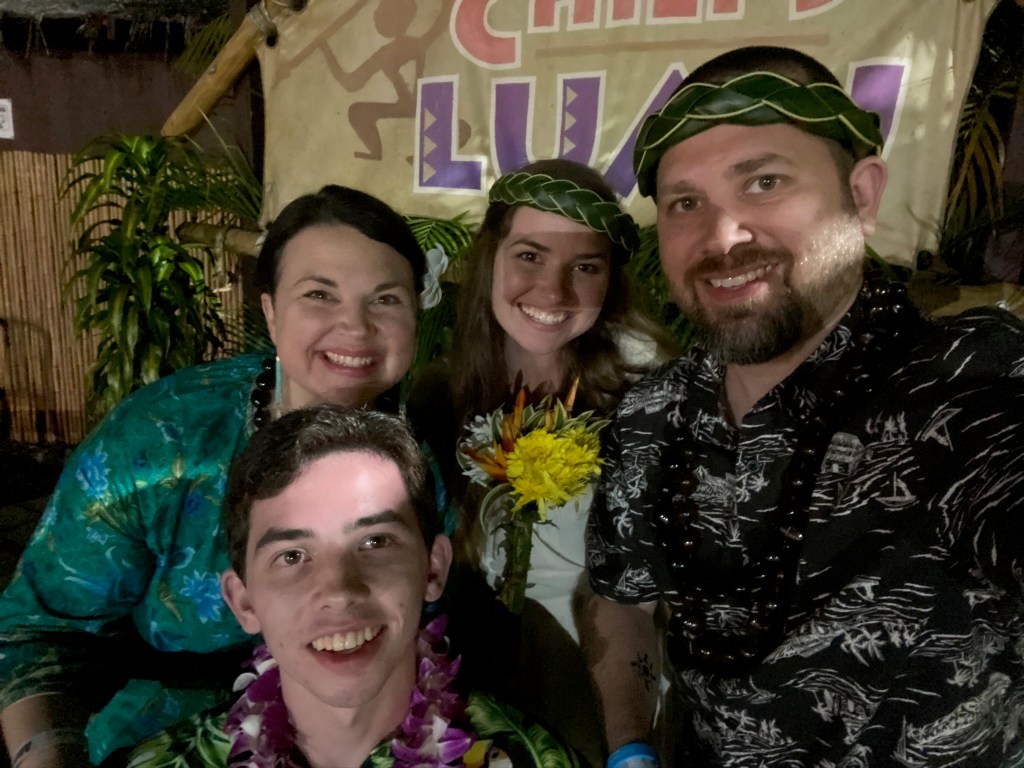
Figure 2: My family (missing my little brother Omarion) at a luau in Hawaii in March 2020.
The loss of my dad took away one of my biggest supporters, but the relentless support from my mom, sister and brother is still there. It’s comforting to know that on my hardest days, they are a 30-minute trip down 280 away. It fills me with peace to know how proud my dad would be to see me covering the Iron Bowl, interviewing the mayor of Phenix City or learning to play his guitar.
Because while what Friedreichs ataxia meant for my future broke me, I woke up the next day and started healing again.
I walked out of my room and into the laundry room, “Mom, what is the disease y’all told me about called again? The one I have.”
Now that I had that crucial information, I could move on. My family and I haven’t been foolish enough to do it alone, though. That summer, I enrolled in and was welcomed into a clinical trial at the University of Florida. Then next year, I attended my first FARA event where I met a lot of the people I’d been in a group chat with in person for the first time. That is when my dad encouraged me to apply to become a FARA ambassador, and I did just that in January of 2020. We have since attended another Energy Ball, three RideATAXIA events, watched the CURE FA Soirée on the couch in 2020, and attended several symposiums, including the one in Philadelphia that I spoke at.
At those events, I met a ton of great friends, amazing families, heard heart-warming and moving stories.Those not only start life-long friendships that inspire me to keep fighting, my parents are able to meet other parents of FA patients and make connections that encourage them to persevere. If those families can fight through it all and stay positive, so can we.
And that is why the words Friedreichs Ataxia have not only broken me, but they have also put me back together.


 Knowin' Noah
Leave a reply to Brandi Mccain Cancel reply