
Time never stands still. Tick, tick, tick… The alarm is just waiting to go off. Add a progressive disease, like Friedreichs ataxia, into the picture and everything feels rushed. Everyday, I find myself rushing to get ready in time to go. It doesn’t matter if I wake up 3 hours before it’s time to go, I’ll most likely be two minutes late. That’s just me, I guess – always have to get that one last thing done that I don’t have time for before I rush out the door. Sometimes, with FA, it feels like that clock is sped up times 20. Go on that trip now, or you never will be able to. Lift weights now, or you’ll get too weak. For me specifically, it’s go out and have fun now, or you might never be able to.
This isn’t necessarily true, I know. I remember sitting in my room after a rough day of high school and saying that to my dad, and it broke his heart. “You’ll always be you, buddy. Progression won’t stop you from having fun.”
I thought quitting sports was going to ruin my future. Now, I catch myself thinking ‘if I don’t go out and go to parties, I’ll miss my chance.’ The truth is, I’m not a party person and never have been, but sitting in the gym and then playing video games on Halloween while I see pictures of everyone at parties, ones that I wasn’t invited to, admittedly stings.
There is no reason for me to be jealous. I have been very successful in college, and I am happy with how I’ve grown. I have some great friends who do invite me places and an amazing, loving family. And there’s no way I can leave out my FAmily (the FA community) – they’re amazing, inspiring, supportive, and they’re always near to me despite the physical distance. For all of those, I am beyond grateful.
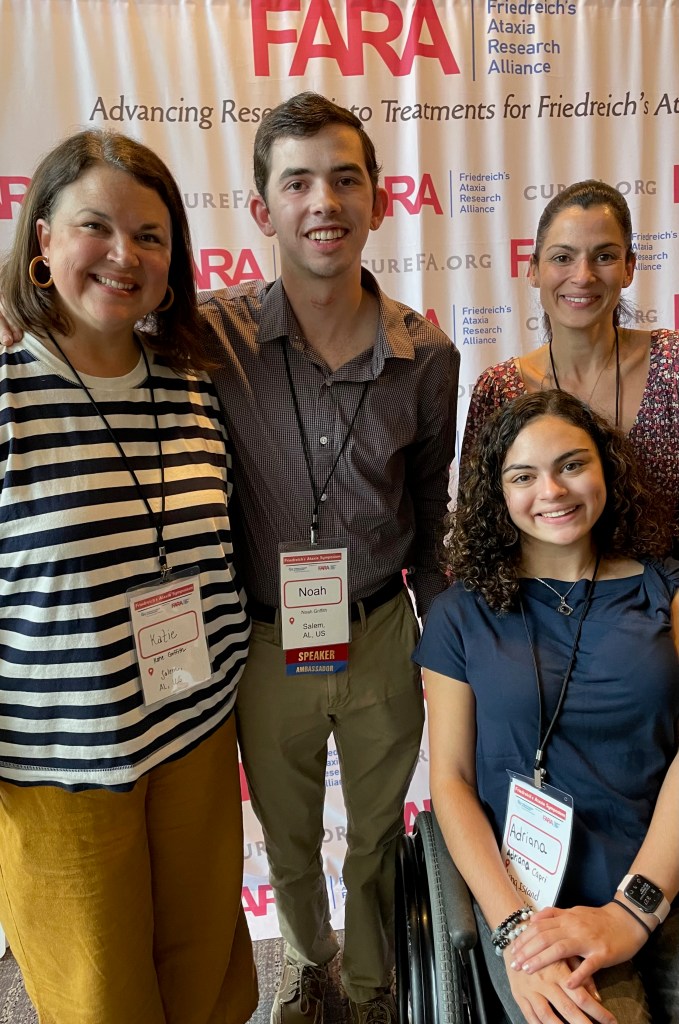
But there’s still a feeling of hurt that I can’t shake. Over the years since my diagnosis, I’ve had so many friends distance themselves and make excuses as to why they can’t hang out with me anymore. I always try to be understanding, but at the end of the day, you make time for the people you care about. As my friend Adriana Capri said beautifully, as a disabled person, it doesn’t feel like the majority of people are willing to go the extra mile for me as I am for them.
Also similar to what Adriana said, the thoughts that run through my head when someone distances themself are: “Am I that much of a liability? Do they really not like me anymore? Am I not fun like I used to be? Should I find new friends?”
I’m always willing to help where I can: giving a ride, helping with homework, buying friends food or drinks or simply doing favors. I don’t see why helping me with simple physical tasks is seen as a liability.
In fact, I do everything I can to minimize the help I require because in reality, I don’t like asking for help (I’m incredibly stubborn). I came to Auburn not using a walking device, and while I wanted so badly to keep it that way, I felt due to my progression as well as navigating a bigger campus, it was a necessary adaptation for me. I also wanted to be able to go out with friends and be independent. I didn’t want my friends to have to carry things for me, worry about me falling, or feel like they needed to offer their shoulder to use for balance. At the same time, I easily could’ve gone to a wheelchair. But I wanted to keep my ability to walk for as long as possible. “If you don’t use it, you lose it.”
But now, my abilities have declined, and I’ve begun looking at wheelchairs. You see what I mean by the clock is ticking faster with FA? This is incredibly hard, and I can’t believe I’m looking at wheelchairs at age 21, but again, I’m doing this to maintain independence. I want to be able to get to class on my own, navigate campus, and even travel. Otherwise, I just can’t without worrying about falling or wearing myself out. I can no longer walk up and down a hill, and tripping and dragging my feet has become an issue along with extreme fatigue.
I am explaining these things to show my effort in maintaining independence and keeping from putting the task of “taking care of me” from falling on my friends. Again, Adriana said it perfectly, being a friend is much different from being a caregiver.
I’ve heard some really hurtful things since getting to college, like: “I would go with you, but I don’t want to be responsible for someone else right now,” “I overheard them say ‘Just don’t worry about Noah, he’ll slow us down,’” and “You are so ungrateful. You never say thank you.”
And of course, these are really honest things to say. Even more than that, I’ve heard a lot of excuses about why people are too busy to hang out with me. I don’t know what more I can do to negate the way people view these things. I do things that may be difficult for me because I want to ask for help as little as possible. I like being independent, as I’ve shown. It is hard for me to accept that most people just aren’t willing to deal with even the minor inconveniences that come with hanging out with me. It hurts that I’m willing and happy to help how I can, but many aren’t willing to put in any effort to be friends with me in return. Also, I do say thank you when I remember to, but I don’t think you should have to thank someone for being a friend.
But there are some who are loyal. There are some who have hung around through it all: the diagnosis, the progression, the frustration, the passing of my dad, etc. And if that applies to you, thank you so much. You a real one.
I remember my dad saying at my Southern Union graduation party that he’s proud of how I’ve fought through tough times and done it while maintaining a lot of my friendships along the way. It breaks my heart that he saw a few of them fall apart in his last days, but didn’t get to see me build stronger, better ones.
It’s just a lesson I’ve had to learn: not everyone is there for you like you think. I would think that as my disease progresses and things get harder, friends would support me more. That’s how friendships work, right? My true friends have proved those thoughts to be true. Hanging around even when things are hard and it might make them uncomfortable is just rare.
It shouldn’t be that way. My FA friends and I already deal with enough, and wrestling with the relational side of having a disease is just another thorn in our sides. This isn’t to say disabled people can’t do things on our own: my friends with FA are all successful and driven. To name a few, Mekayla Holm has a degree in data science and is killing it in her work at 3M. Adriana Capri graduated in May with a Bachelor’s in fashion merchandising and is writing inspiring, uplifting blogs. Kyle Waterman graduated in 2019 with a degree in statistics, and he just got accepted into his dream school, Oregon (GO DUCKS!) Brendan Halverson is grinding it out in college and aspires to major in biochemistry, and he pushes himself to walk further at PT each week. And most of all, they are amazing friends. We don’t need to be popular and have a bunch of friends to do great things, but no one can do it alone, and no one should have to.
If you would like to read Adriana’s story, click the link:
https://positivelyadri.com/2022/11/15/would-you-go-the-extra-mile/.


 Knowin' Noah
Leave a reply to Would You Go the Extra Mile? – Adriana Capri Cancel reply