
This past December, I was preparing to cross the gym to get to my apartment room. Only one problem – I tugged on the handle and it didn’t open. I looked up to see the sign on the door read “gym closed due to renovations.”
That left the only route to my room across the courtyard, up a flight of stairs and halfway around the complex through several more doorways. With FA, that basically means no route to my apartment. Even if I used all my energy to walk there, it is practically impossible for me to get myself and my walker up the stairs. This renovation was only thought of as a detour – just a slight inconvenience. No one told me they were doing renovations or that the sole accessible route to my room would be closed off because no one thought of it that way.
Accessible spaces – parking spots, walking routes, living spaces, bathroom stalls, etc. – aren’t there for convenience, they’re there because people need them to live their lives safely and efficiently.
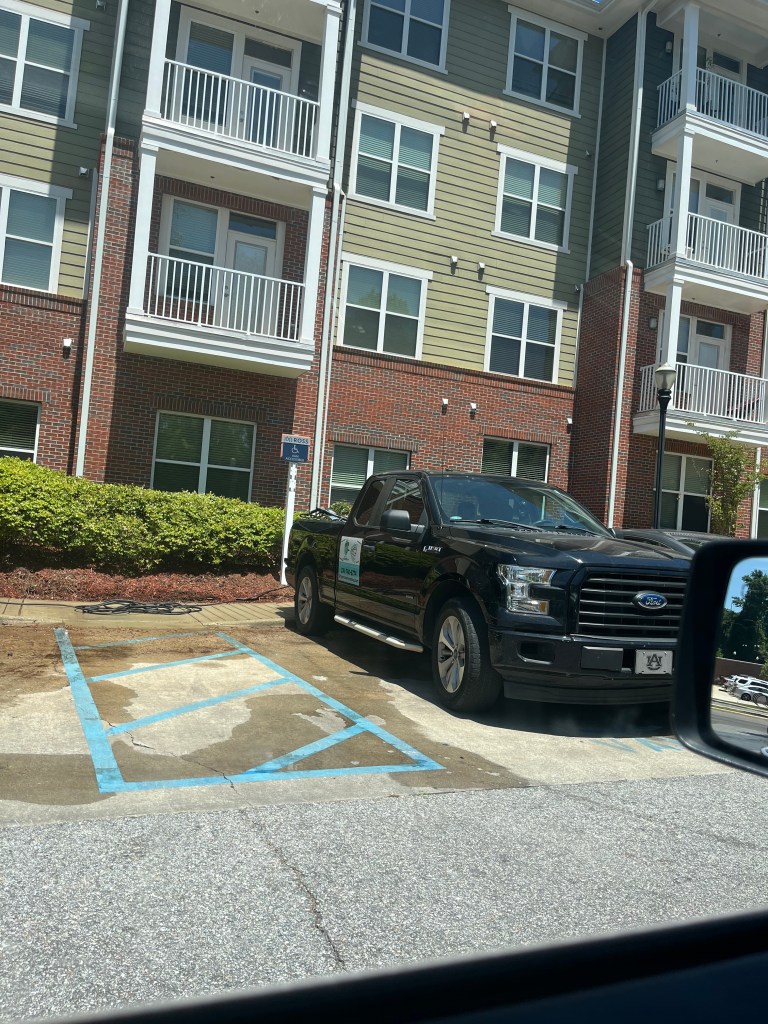
Countless times I’ve seen people use handicap spots to wait for people they’re picking up, to make deliveries, or maintenance people using them to get closer with their equipment – in other words, people use them for their convenience. But that is a misuse of something that is there out of necessity. Parking there or taking up that space, even momentarily, could be denying someone a chance to get to their destination in a safely and timely manner.
The same thing can be said for handicap stalls. They might be more convenient for all people – they provide more space and might be more available – but an able-bodied person using them is potentially robbing someone with a mobility aid access to a bathroom stall because other stalls are too narrow to turn around with a walker or wheelchair and don’t provide a grab bar to assist with a transfer to the toilet.
Think of a person who needs living accommodations. Having a living space that meets your needs is not something disabled people ask for for the sake of convenience or comfort, it’s a matter of being presented a living space that offers a similar experience to other people. It’s the same thing with public handicap spaces.
For example, I don’t use an elevator because I’m too lazy to use the stairs or because the elevator is quicker. I use it because I am not able to use the stairs safely without falling. The same principle applies to handicap parking spots or accessible bathroom stalls. Disabled people aren’t being privileged by having access to those, using those things is a form of adaptation to living with a disability.
It might seem harmless to pull in a handicap spot just for a quick moment for a quick stop, but in those times I encourage you to think about what accessibility means. According to Merriam-Webster Dictionary, it means “capable of being reached.” Not easy to reach, quick to reach or convenient to reach. If you or others with you are capable of safely reaching your destination without a handicap space, don’t use it.
Accessibility is not a luxury, it is a necessity. Seeing people park in handicap spots and block accessible paths allows me the chance to kindly communicate that and advocate, but it is a selfish action to use something that disabled people rely on to live normal, independent lives and use it to save yourself a small amount of time and energy.
Choosing to refrain from using accessible spaces and units is simply a matter of considering how your actions can impact others, which is something we can all improve at, myself included.

 Knowin' Noah
Leave a comment